
Cleaning suede shoes is almost entirely a dry job: an eraser to lift the stain, a brush to raise the nap, and water only inside a formulated cleaner — never on its own, never in the sink. It is the opposite of what works on smooth leather, where you feed the hide and then polish it.
The reason is the material. That velvet surface is leather abraded on purpose, and the nap it produces gets dirty, flattens, and goes shiny wherever it rubs. No cream puts it back. You work by taking away, not by adding.

Same finish, three depths of brown. On the pale pair every mark reads first, and that is where the eraser earns its keep.
Suede, nubuck and faux suede are three different materials
The difference decides how you clean them. Suede comes from the inner split of the hide, the flesh side, so the nap is longer and softer. Nubuck is buffed on the grain side, the compact outer face, which leaves a short nap with the natural grain still showing through: pores, faint wrinkles, the odd healed scar. That compact layer is what makes nubuck tougher. It is also what a harsh brush strips off in one pass.
Then there is faux suede, and this is where the worst damage happens. Alcantara, the best known microfibre of the type, tells owners to run “a slightly moistened white cotton cloth” over it and, when the cover comes off, to wash it in the machine. Correct instructions, for that material. Applied to a pair of real suede boots they finish them.
The dry clean, and the order that matters
Start with the eraser, not the brush. A suede eraser is a soft, crumbly block that lifts dirt out of the nap by abrading itself rather than the leather. Press lightly. Push hard and it stops picking up dirt and starts taking the nap with it — the shiny patch you are left with is not a stain, it is missing fibre.
The brush comes second, and it is chosen by colour more than by material. Crepe rubber is gentle enough for pale suede. Brass bristles belong on dark, worn suede, where they clean without scratching, and they are too much for nubuck.
Direction counts as much as the tool: always follow the lay of the nap. Tarrago splits the job in two in its own instructions: a brush at the start to lift the dust, the soft part of the brush at the end to finish. Brushing back and forth like a carpet leaves the nap in disorder, and you see it the moment light hits the shoe sideways.
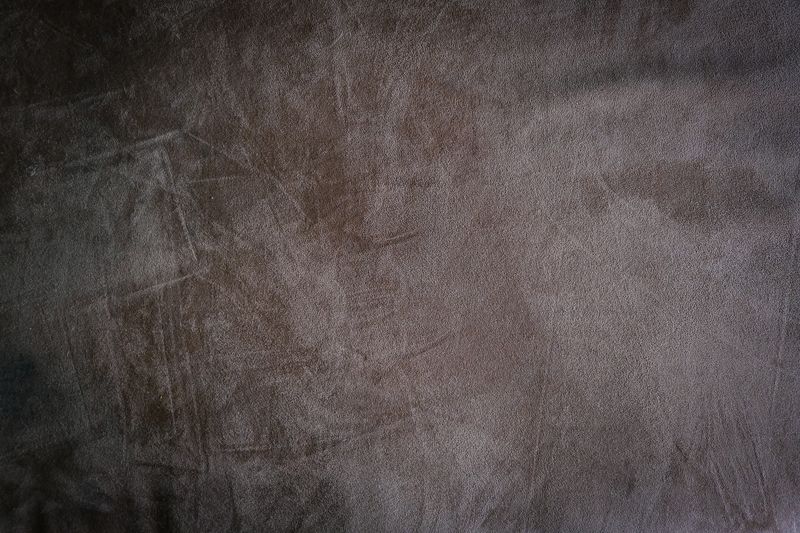
The light patches and the dark ones are the same brown. Only the direction the nap is lying in changes.
Water: cobblers say never, the makers put it in the bottle
The sources disagree here, and the disagreement is more useful than a flat rule.
Geox, in its own product care instructions, states that its footwear “is not designed to be washed using water or other detergents” and sends suede owners to a soft-bristled brush instead. Repair shops put it less politely, because they are the ones who see the shoes that came back from a wash.
And yet Saphir sells a suede cleaner that you dilute with water, brush in, then rinse off the bristles and brush again.
They are not describing the same thing. Water measured into a formula with surfactants wets the nap for a controlled time and dries on a schedule the maker has tested. Water poured over suede soaks the split, moves the dye and dries stiff. The bottle tells you the ratio. The sink does not.
The stains you actually get
Water marks and tide lines are the easy ones. Blot the excess with a dry cloth without rubbing, leave the shoe to dry in the air, then brush the surface back. Grease answers to the eraser, again lightly, followed by the brush.
Road salt is its own chapter, because the white bloom does not behave like an ordinary stain — we wrote it up separately in how to remove salt stains from leather boots.
On cupboard remedies it is worth being precise about who says what. Talc, baking soda, white vinegar and cornstarch turn up in most guides online. They appear nowhere in the official instructions from Collonil, Saphir, Tarrago or Kaps, which point you at their own products instead. That is exactly the bias you would expect from them, and still worth knowing before you tip cornstarch onto a boot.

The paler, shinier toe is nap worn away by use, not a stain. A brush recovers a little there; cleaner recovers nothing.
Protecting it beats cleaning it
The spray goes on when the shoes are new, and it is the difference between a mark you brush off and one that has gone into the nap. Collonil, for its Nubuk + Velours spray, says to spray from 20 cm to get an even, fine mist, to give at least three light coats before the first wear, and to redo the treatment after roughly 8-10 wears. Tarrago asks for the same 20 cm on its own nubuck sprays, and the wait before you brush again depends on which one you bought: ten minutes for the High Tech Nano version, thirty for the standard one.
Choosing a product and setting the interval is a longer subject, and we covered it in how to waterproof leather boots before winter. What belongs here is the precaution everyone repeats and hardly anyone follows: test on a hidden patch, inside the shaft or behind the tongue, before you spray the whole shoe. Geox asks for the same test before any cleaning method.
Drying, storage, and suede bags
On heat there is no dissenting voice anywhere. Hairdryers and radiators are out. Geox says to let soaked shoes dry naturally, away from direct sunlight and other direct sources of heat. While they dry, stuff them with paper so they hold their shape and give up the extra moisture, then keep them somewhere dry and ventilated — not a sealed box in a basement.
For a bag the principle is identical and the practice shifts. Suede panels take the eraser and the brush exactly as a shoe does. The extra problem is that a bag stands still for months in a wardrobe, squashed by the ones beside it, and the nap flattens wherever it is pressed. Stuff it with paper, keep it in a cotton dust bag, never plastic. If the model mixes suede with smooth leather, the smooth parts follow the rules for cleaning and storing a leather bag.

Dark suede hides tide lines, but the flattened nap over the instep still shows: that is the part that bends at every step.
Frequently Asked Questions
Can you put suede in the washing machine?
No. Geox states that its footwear is not designed to be washed using water or other detergents, and repair shops regularly get shoes brought in ruined after a wash. Removable faux-suede covers are a different material with different rules.
My suede shoes got soaked in the rain. Are they ruined?
Almost never. Blot the water with a dry cloth without rubbing, stuff the shoes with paper and leave them to dry in the air, away from radiators and hairdryers. Once they are completely dry, brush them: the nap lifts and the tide line usually goes with it.
How often should suede shoes be re-waterproofed?
Collonil asks for at least three light coats before the first wear and a fresh treatment after roughly 8-10 wears. That is the maker’s figure for its own spray; other brands set their own interval, so read the can.
Does talcum powder lift grease stains from suede?
It circulates in guides online, not in the instructions written by the companies that make suede care products, which never mention it. What all of them point to is a dry eraser, used with light pressure.
Article by the Purse & Co Editorial Team.
Disclosure: this article may contain affiliate links. If you buy through these links, Purse & Co may earn a small commission, at no extra cost to you.