
To spot a fake Balenciaga bag, start by ignoring the logo. On the house’s most copied shape, the City, there is barely one to look at: the bag was drawn to look plain, soft and a little beaten up, and it has spent twenty-five years being admired for exactly that. Every reflex that works on a monogram bag fails here. What is left is the part a counterfeiter has to pay for — the weight of the metal, the way the handles are wrapped, the finish of the leather — plus one fact about the code inside that is worth knowing before you buy anything secondhand.
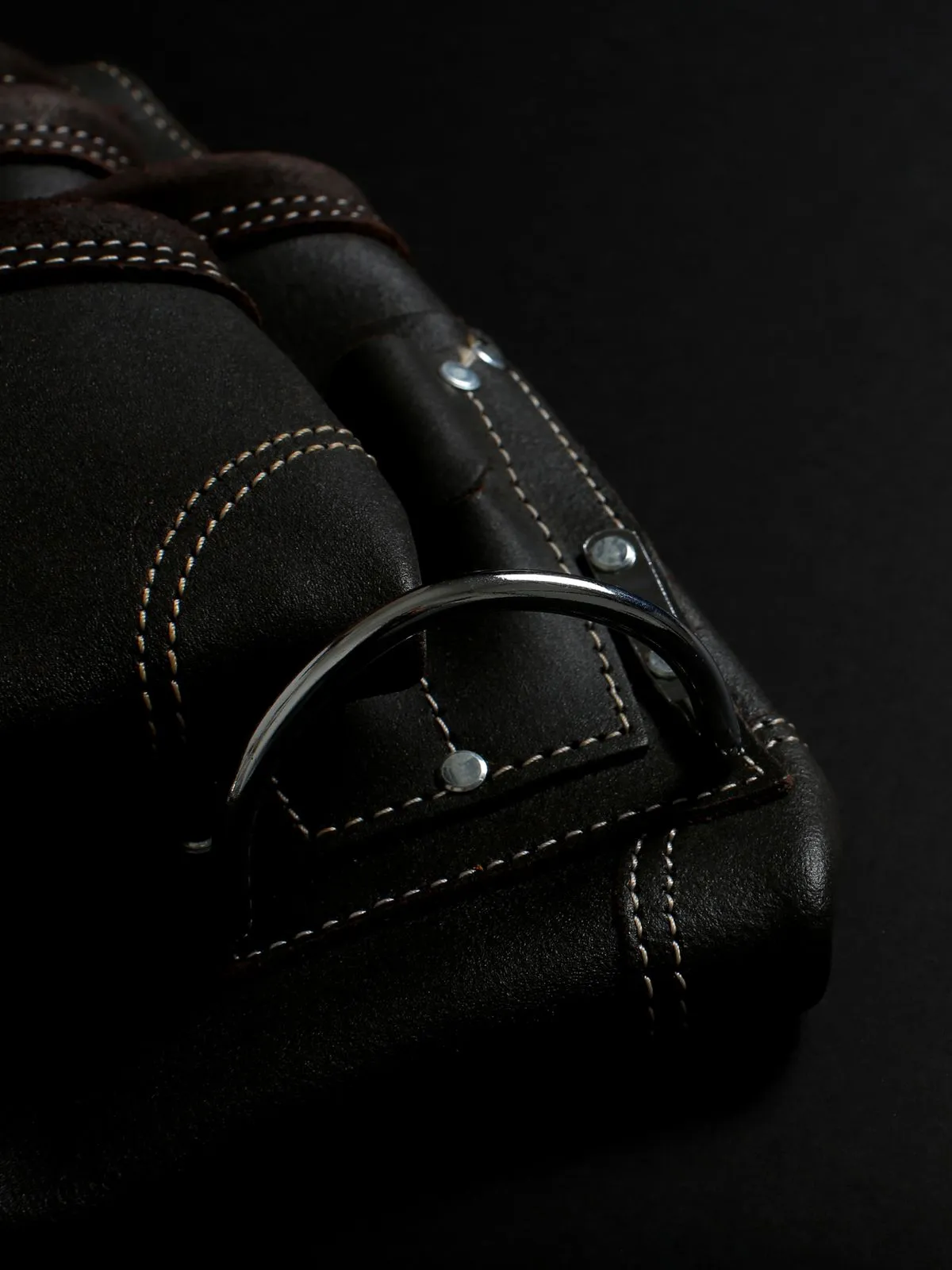
A bag designed to look worn breaks the usual checks
Some history helps, because it explains why this shape is so hard to judge. According to Kering, which has owned the house since 2001, Balenciaga was founded in 1917 by Cristóbal Balenciaga in Spain, and moved to Paris twenty years later, where the designer showed his first couture collection. The group notes that 2001 — the year Balenciaga joined it — is also the year the City bag launched. The house returned to couture in 2021 after a 53-year absence. Demna led it for a decade from 2015; Pierpaolo Piccioli has been creative director since 2025.
The City arrived with slouchy, crinkled leather, studs, long zip tails and no logo across the front. That was the point, and it is still the point on the current Le City. It also means the two checks most buyers reach for first are useless here. There is no monogram to compare against a reference photo. And “the leather looks creased and distressed” is not a defect — it is the material behaving as intended.
So the examination moves to construction. That is good news, because construction is where the money goes, and where a copy priced at a tenth of retail has to make its savings.
Brass has weight, and that is where copies stop
Balenciaga’s own product page for the Le City Bag Small is unusually specific about what is on the bag, and it is worth using as your reference list. It gives Arena lambskin, a cotton canvas lining, and brass hardware. It lists a double-sided zip with long tails and a knotted leather puller, a front zipped pocket with a second knotted puller, one inner zipped pocket, and one removable mirror with the Balenciaga logo debossed tone-on-tone. It is made in Italy, measures 30 by 19 by 9.6 cm, and costs 2,590 dollars on the US site at the time of writing.
Start with the brass. Weight is the single hardest thing to counterfeit cheaply, because the cost is in the metal itself rather than in the skill of the person shaping it. Real hardware feels dense for its size and slightly cool; hollow, light, tinny zip pulls and buckles are the most reliable warning there is, and no photograph will tell you. Pick the bag up before you look at anything else.
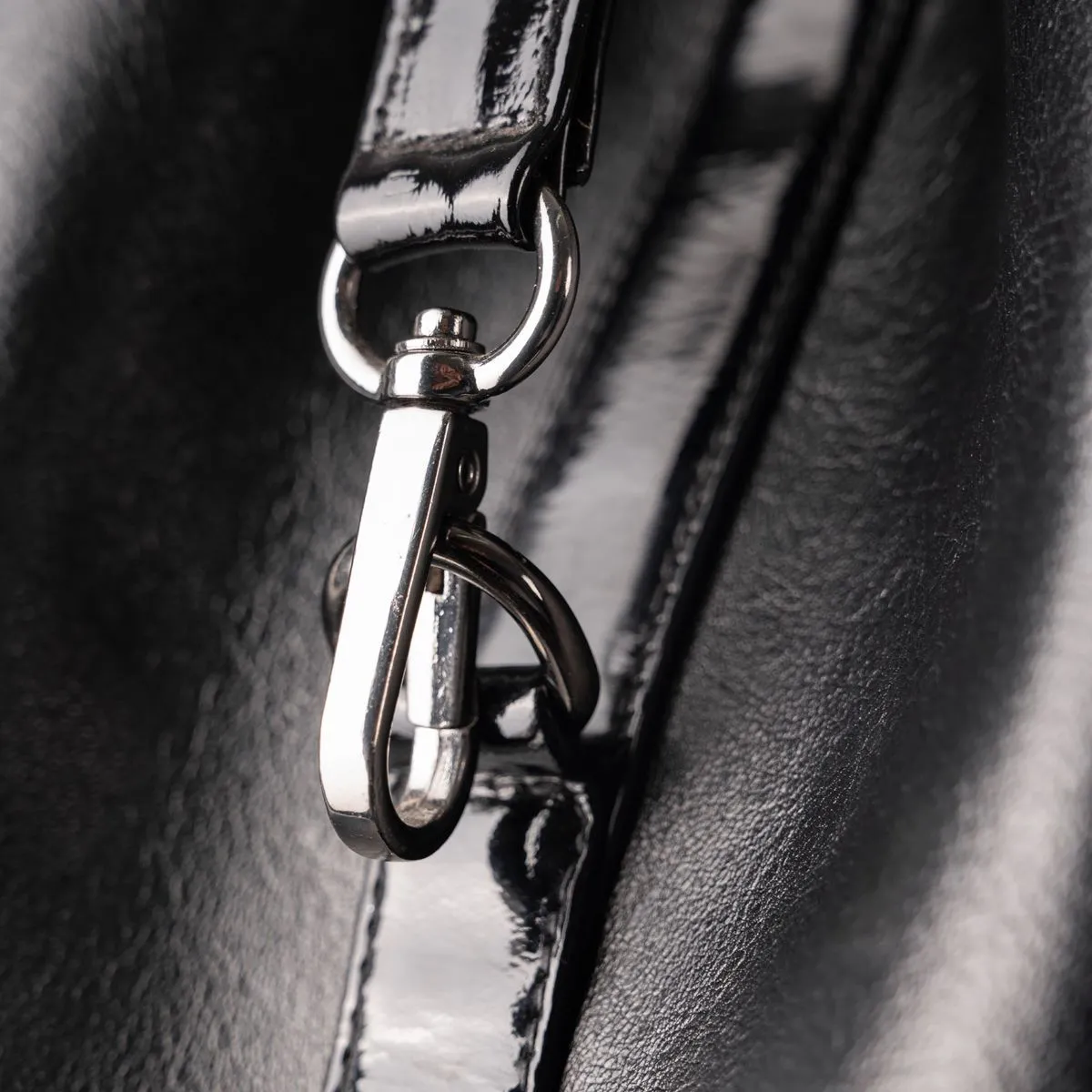
Then look at how the metal is attached. Rivets should sit flush in the leather without a raised collar or a ring of glue around them. A clasp should swing without wobbling in its housing. On a bag described as lightly used, plating that has already worn back on the raised edges is telling you the base metal is soft and thinly covered.
The zip pulls are worth a second of attention on their own, because Balenciaga’s specification is precise and a copy tends to approximate it: the leather tails are long, and they are knotted. Short tails, a glued-on tag instead of a knot, or a puller that hangs stiffly rather than falling soft — none of these is proof by itself, but together they describe a bag built to a different budget.
The handles are braided by hand, and that is expensive
The detail we would look at first on a City is the handles. Balenciaga describes them as two hand-braided handles with waxed cord — not moulded, not stitched around a core, braided. That is minutes of skilled work per bag, repeated across every unit, and it is exactly the sort of cost a counterfeit operation cannot carry.
What you want to see is a braid with even tension along its whole length, the same number of passes on both handles, and a clean transition where the braid meets the leather and the metal. What gives a copy away is irregularity: the weave tightening and loosening, one handle visibly fatter than the other, frayed cord at the ends, or a seam of glue where the wrapping terminates. Ask a seller for a close photograph of both handles side by side and of the point where each one joins the bag. It is a harder request to fake than a picture of a logo.
The leather itself deserves a hand rather than an eye. Arena lambskin is soft and creases readily, so wrinkles prove nothing. What you are checking is whether it behaves like skin: it should give under pressure and slowly recover. Leather that feels rigid, springs back like foam or smells of solvent is not the material on the specification.
Inside: the mirror, the tag, and the number nobody can check
The removable mirror is a genuine part of the bag, and its logo is debossed tone-on-tone — pressed into the leather in the same colour, not printed on top in contrasting ink. Judge it as an impression: even depth across every letter, sitting straight, clean edges. Lettering that looks laid on the surface, or deep at one end and faint at the other, is the problem.
One caution about the mirror, though. Because it detaches, it circulates on its own, and a genuine mirror or dust bag proves nothing about the bag it arrives with. Authenticate the bag, not the accessories.
Then there is the code on the interior tag, and here the useful fact is a negative one. Balenciaga publishes no way to check it. We could find no public database and no official lookup tool, so any site offering to verify your Balenciaga serial number is selling a service the house does not provide. The house’s own customer service pages say something narrower and more honest: Balenciaga guarantees the authenticity of products bought through balenciaga.com, its stores and its authorised retailers, and it takes legal action against sellers of counterfeits. That is a statement about where you buy, not a tool for checking what you already own.
We are also deliberately not printing a font-and-spacing checklist for the tag. Those rules circulate on the blogs of paid authentication services, are not published by the house, and change between production runs. One of them — that a missing engraving on the back of the tag makes a bag “100 percent fake” — is the kind of absolute claim that gets a real bag rejected and a good copy waved through. Treat the code as one detail that has to agree with everything else, and nothing more.
What it costs new, and the ratio that protects you
Prices are the check people skip, and it is the one that needs no expertise. On Balenciaga’s US site at the time of writing, the current bag families are Le City, Rodeo, Le Cagole and Hourglass. The prices we were able to read sit roughly like this:
- Le City — small 2,590 dollars, medium 2,990. The pouch on strap is 1,090 and the clutch with chain 1,790.
- Hourglass — XS 2,995 dollars, small between 2,900 and 3,200 depending on material; wallet on chain from 1,150.
- Rodeo — small from 3,650 dollars, medium from 4,590, large 5,650. The sling pochette is 1,690.
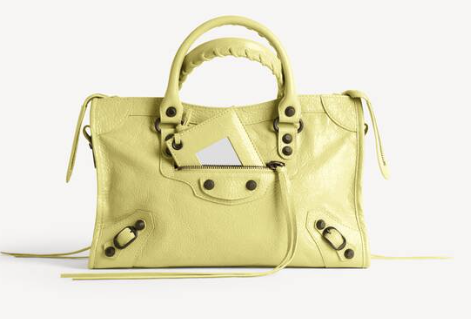
Those figures move with currency, local tax and season, so do not treat them as fixed. Use the ratio instead. Find the current retail price of the exact model and size, then measure the listing against it. A recent bag in good condition, sold secondhand, plausibly lands 20 to 40 percent below retail. Ninety percent below is not a bargain and not a seller’s mistake: it is the price of a different object.
If you are buying your first secondhand Balenciaga, there is an order of difficulty worth respecting. The City is the easiest shape to check, simply because it has existed since 2001 and thousands of reference photographs exist. A rare seasonal colour in an unusual material is the hardest — and that is exactly the sort of listing a bad-faith seller prefers.
Where to buy, and what the resale programme does not do
Buying from a boutique, balenciaga.com or an authorised retailer settles the question before it arises, and it is also the condition attached to the house’s repair service: Balenciaga offers repairs on products bought through those channels, while noting that a repair is not always possible and may be chargeable.
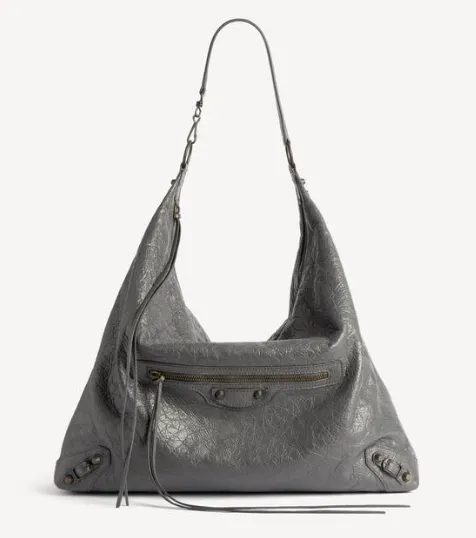
Balenciaga is unusual among luxury houses in running its own resale programme, launched in 2022 with the platform Reflaunt. You drop a piece at a participating store or book a collection; it is documented, authenticated, photographed and priced, then listed across Reflaunt’s network of marketplaces, and you are paid either by bank transfer or in store credit worth 20 percent more.
It is worth being precise about what that does, because it is easy to misread. The programme authenticates bags going into resale from their owners. It is not a service that will check a bag you already own or one you are thinking of buying elsewhere, and a bag sold on a marketplace is vouched for by that marketplace to its own standard — not by the house. We could find no Balenciaga service that authenticates bags for private buyers, which is normal at this level of the market and worth knowing before you pay for a certificate implying otherwise.
The scale of the problem is not niche. US Customs and Border Protection reports seizing 78.4 million counterfeit items in fiscal year 2025, with an estimated retail value of 7.4 billion dollars had they been genuine. Handbags and wallets were the third largest category by value, at just under 978 million dollars, and roughly 67 percent of the seized quantity came from China and Hong Kong.
More from Purse & Co
The method carries across houses even though every detail changes. We have also covered how to spot a fake Saint Laurent bag, how to spot a fake Bottega Veneta bag and how to spot a fake Gucci bag.
Frequently Asked Questions
Can I check a Balenciaga serial number online?
No. Balenciaga publishes no public database and no official lookup tool, so any website offering to verify your serial number is selling a service the house does not provide. Treat the code as one detail that has to agree with everything else on the bag.
Is creased, wrinkled leather a sign of a fake Balenciaga?
No, and this is the most common mistake. The City was designed with soft, crinkled leather, and Arena lambskin creases readily by nature. What matters is how it behaves: it should give under pressure and slowly recover. Leather that feels rigid or springs back like foam is the warning sign.
What is the fastest check on a Balenciaga bag?
Pick it up. Balenciaga specifies brass hardware, and weight is the hardest thing to counterfeit cheaply because the cost sits in the metal itself. Hollow, light, tinny zip pulls and buckles are the most reliable single tell, and no photograph will show you.
Where are Balenciaga bags made?
In Italy. The house’s product pages give Italy as the country of manufacture for its leather goods, along with the materials — Arena lambskin, cotton canvas lining and brass hardware on the Le City, for example.
Does Balenciaga authenticate bags for buyers?
We could find no Balenciaga service that authenticates a bag for a private buyer. Its resale programme with Reflaunt authenticates pieces that owners put into resale, and the house guarantees authenticity for what you buy from balenciaga.com, its stores and authorised retailers. Neither one checks a bag you already own.
Article by the Purse & Co Editorial Team.
Disclosure: this article may contain affiliate links. If you buy through these links, Purse & Co may earn a small commission, at no extra cost to you.