
To spot a fake Saint Laurent bag, start by throwing out the check most guides lead with. The interlocking YSL monogram is not a dating tool and never has been: the house renamed its ready-to-wear line Saint Laurent Paris back in 2012, but the monogram stayed on the leather goods and is still there today. What separates a real bag from a copy is physical — the weight and casting of the hardware, whether the quilting survives the seams, how the edges are finished — plus one uncomfortable fact about the code inside, which nobody can check against anything. Here are the checks in the order that actually helps.
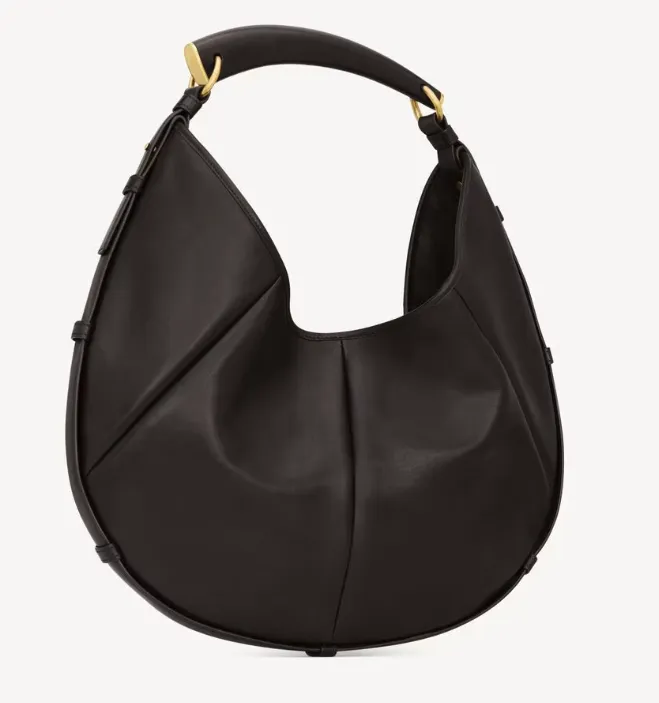
The 2012 name change dates the label, not the bag
In June 2012, a month after taking over as creative director, Hedi Slimane announced that the ready-to-wear line would be called Saint Laurent Paris, effective from the spring-summer 2013 collection. The move had a precedent inside the house: the original ready-to-wear line launched in 1966 as Saint Laurent Rive Gauche, and Paris simply took the place of Rive Gauche. Anthony Vaccarello has led the house since 2016.
Here is the part that matters for authentication, and that a lot of listings get wrong in both directions. The YSL monogram did not disappear from the products. It was designed in 1961 by A.M. Cassandre — the graphic designer Adolphe Jean Marie Mouron — after Yves Saint Laurent and Pierre Bergé commissioned him to draw a logo for the couture house, and the Musée Yves Saint Laurent Paris describes the result as a monogram of three simple intertwined initials. Sixty-odd years later it is still on the bags.
So two claims you will meet on resale listings are both false. “It says YSL, so it must be old” is wrong: current bags carry the Cassandre. “Real ones say Saint Laurent, not YSL” is also wrong: the change was about how the clothing line is labelled, not about removing the monogram from leather goods. Neither the presence nor the absence of those three letters tells you anything on its own — and a monogram is the cheapest detail on the whole bag to reproduce convincingly.
The Cassandre is cast metal, and that is where copies run out of money
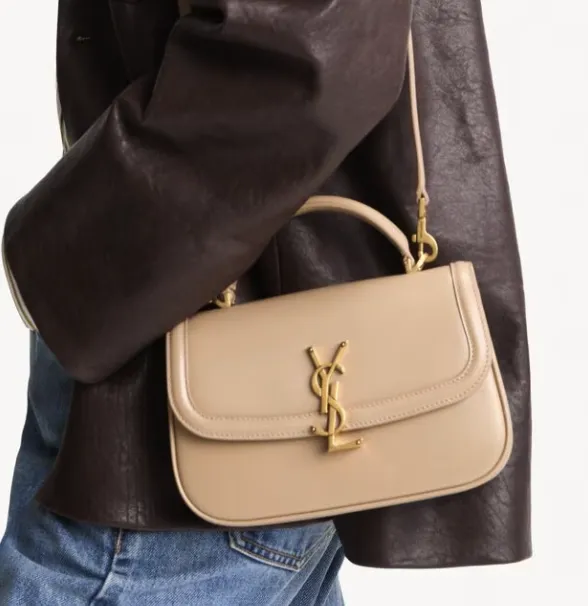
The monogram plaque on the front of most Saint Laurent bags is the single most useful thing to hold. On a genuine piece the three letters are one solid cast component, noticeably heavy for its size, with crisp edges where the bars of the Y, the S and the L cross over and under each other. The rivets that pin it to the leather sit flush, without a raised collar or a smear of glue around them.
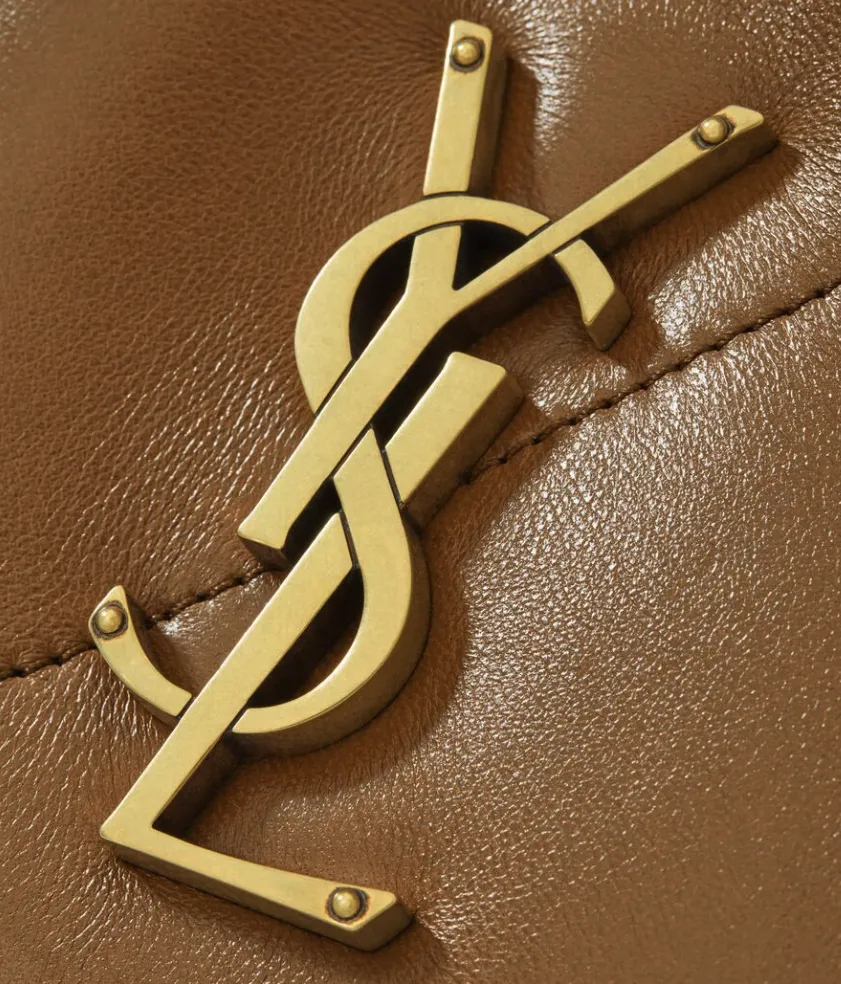
Finish confuses people, so it is worth saying plainly: a warm, matte, slightly dulled gold is normal here, not a defect. The house uses both bright and deliberately aged finishes. What is a warning sign is plating that has already lifted on the raised edges of a bag sold as unworn.
Then pick the bag up. Weight is the one thing a counterfeiter cannot fake cheaply, because the cost sits in the metal itself. Hollow, light, tinny hardware is the most reliable single tell there is — more reliable than anything you can see in a photograph.
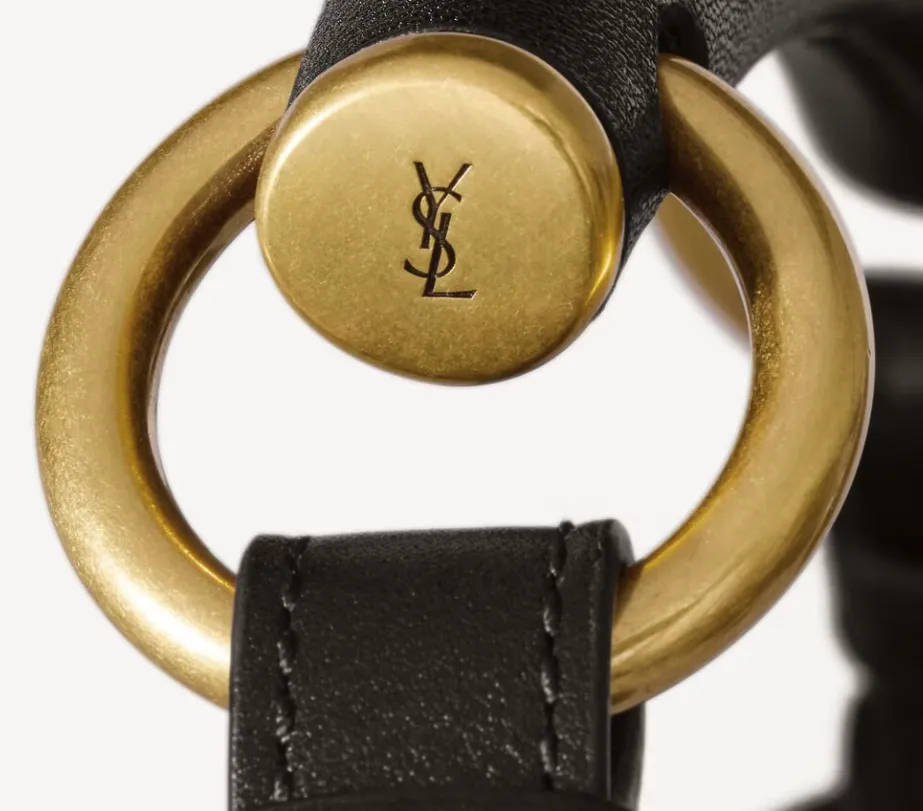
The same logic applies to rings, sliders and zip pulls. Engraving on a real bag is cut at an even depth and sits square; on copies it tends to be shallow and slightly smeared, as though pressed rather than cut, with the letters drifting off centre.
Where we stop is the typography rabbit hole. Plenty of guides will tell you the exact angle at which the tail of the Y should finish. Those rules circulate on the blogs of paid authentication services, are not published by the house, and change between production runs. Chasing them mostly makes people confident about the wrong thing.
Quilting, panels and edges: how the bag is built
Saint Laurent makes its leather goods in Italy, and it is worth knowing at what scale, because that sets the standard the bag in front of you has to meet. In December 2023 the house brought its leather-goods artisans together in a purpose-fitted Atelier Maroquinerie at Scandicci, outside Florence — around 309,000 square feet, more than 500 artisans and technicians, producing handbags, small leather goods, belts and accessories, along with all of the house’s prototypes and samples.
On the quilted models, one check does more work than all the logo inspection put together: the quilting has to survive the seams. Where two panels meet, the diamonds or chevrons should line up and continue as one pattern across the join. Copies are cut from a pre-quilted sheet without regard to where the panels will land, so the pattern breaks mid-seam, or a diamond arrives at the edge squashed and lopsided. It is the cheapest corner to cut, and the easiest to spot in a photograph — if you know to ask for one that shows a seam.
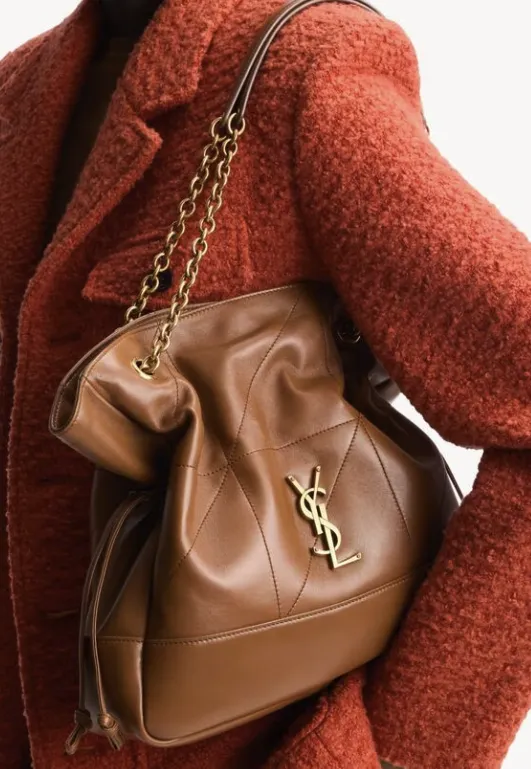
The rest is ordinary leather-goods reading, and on a copy the giveaway is cumulative rather than dramatic. Stitching should be evenly tensioned, without puckering where the seams turn a corner. Edge coating that is already cracking on a bag described as unused is a contradiction, not patina. A chain should be weighty and lie flat rather than twisting. And a soft quilted leather that feels rigid and slightly plastic is telling you what it is made of.
The stamp inside, and the number nobody can check
Inside, there is a stamped impression and, on most bags, a small leather tab carrying a code. Judge the impression as an impression: it should be pressed cleanly into the leather at an even depth across every letter, sitting straight, with consistent spacing. Lettering that looks printed on top of the surface, or that is deep at one end and faint at the other, or that has a blurred double edge, is the problem — not the specific words.
We are deliberately not giving you a wording checklist. The exact text and its placement vary by era and by model, we could not verify a definitive list from the house itself, and a checklist that is wrong is worse than none: it gives a buyer a reason to feel certain about a bag they have not really examined.
On the code we can be categorical, because the important fact is a negative one. Saint Laurent publishes no way to check it. There is no public database and no official lookup tool, so any website offering to verify your YSL serial number is selling something the house does not provide. The decoding schemes that circulate — these digits are the model, those are the year — come from resale platforms and paid authentication blogs, and we have not been able to trace a single one back to Saint Laurent.
Treat the code as one detail that has to agree with everything else, and nothing more. A worn or unreadable tab on an older bag proves nothing either way: leather tabs rub away with use.
Price, where it sells, and what to ask the seller
We are not going to publish a Saint Laurent price list. The house does not publish a single global one, figures move with VAT and currency, and we were not able to read current official prices at the time of writing — so any number here would be a guess dressed up as a fact. For what a bag costs in your country, the source is the official Saint Laurent site or a boutique.
You do not need the absolute number anyway. You need the ratio. Look up the current retail price of the exact model, then measure the listing against it. A recent bag in good condition, sold secondhand, plausibly lands 20 to 40 percent below retail. Ninety percent below is not a bargain and not a mistake — it is the price of a different object. That test needs no figure from us, and it survives every price rise.
Then there is where you buy. A boutique, the official site or an authorised department store settles the question before it arises. On the resale market, prefer a platform that authenticates before it ships — and understand what that means: the platform is vouching for the bag, to its own standard. The brand is not involved. We could find no Saint Laurent service that authenticates bags for private buyers, which is normal at this level of the market and worth knowing before you pay for a certificate suggesting otherwise.
If this is your first secondhand Saint Laurent, there is a sensible order of difficulty. The shapes that turn up constantly on the resale market — the Loulou, the Kate, the Sac de Jour, the Niki — are the easiest to check, purely because thousands of reference photographs exist and any authenticator has handled hundreds of them. A rare seasonal shape in an unusual colour is the hardest, and that is exactly the kind of listing a bad-faith seller prefers. Ask for real photographs rather than catalogue images: the monogram plaque up close, the ring hardware, a seam where the quilting crosses, the interior stamp, the code tab and the base. A seller acting in good faith sends them without being pushed.
None of this is a niche problem. In Mapping Global Trade in Fakes 2025, the OECD and the EU Intellectual Property Office put the global trade in counterfeit goods at 467 billion dollars in 2021, or 2.3 percent of world trade, and the value of fakes imported into the European Union at 99 billion euros, equal to 4.7 percent of everything the EU imports from the rest of the world. Leather goods sit among the most heavily targeted categories in the whole study.
More from Purse & Co
The method carries across houses even though every detail changes. We have also covered how to spot a fake Celine bag, how to spot a fake Gucci bag and how to spot a fake Chanel bag.
Frequently Asked Questions
Do Saint Laurent bags have a serial number you can verify?
Most bags carry a code on a small interior leather tab, but there is nothing to verify it against. Saint Laurent publishes no public database and no official lookup tool, so any website offering to check your YSL serial number is selling a service the house does not provide.
Why do the bags say YSL if the brand is called Saint Laurent?
The 2012 change renamed the ready-to-wear line Saint Laurent Paris. It did not remove the monogram from the leather goods, which still carry the interlocking YSL designed by A.M. Cassandre in 1961. Neither the presence nor the absence of those letters proves anything about a bag on its own.
What is the fastest check on a Saint Laurent bag?
Pick it up and hold the monogram plaque. On a genuine bag it is a solid cast piece, heavy for its size, with crisp edges where the letters cross and rivets that sit flush. Hollow, light, tinny hardware is the most reliable single tell, because the cost sits in the metal itself.
Are Saint Laurent bags made in Italy?
Yes. In December 2023 the house brought its leather-goods artisans together in the Atelier Maroquinerie at Scandicci, outside Florence: around 309,000 square feet and more than 500 artisans and technicians, producing handbags, small leather goods, belts and accessories as well as the house’s prototypes and samples.
Does Saint Laurent authenticate bags for buyers?
We could find no Saint Laurent service that authenticates bags for private buyers, which is normal at this level of the market. When a resale platform describes a bag as authenticated, the platform is vouching for it to its own standard, and the brand is not involved.
Article by the Purse & Co Editorial Team.
Disclosure: this article may contain affiliate links. If you buy through these links, Purse & Co may earn a small commission, at no extra cost to you.