
Spotting a fake Gucci bag isn’t about finding one dead giveaway — it’s about reading several details together. Check that the leather is dense and smells like real hide rather than plastic or glue, that the GG monogram is crisp and properly aligned, that the stitching is even and matches the leather in colour, and that the serial code is heat-stamped, never printed, on the interior tab. No counterfeiter nails every one of these at once — it’s the combination that tells you whether a bag is genuine. Below, point by point, here’s what to look for, and where to buy the real thing with confidence.
One honest caveat up front: this guide is meant to protect buyers, not to serve as a foolproof detector for every fake out there. The best counterfeits keep getting better, and the only absolute certainty comes from Gucci itself or an authorized retailer. But learning to read the right signals will save you from the most common mistakes, especially when buying secondhand.
Materials and leather
Your hands are the first judge. Gucci leather is full-grain, soft but substantial, with a genuine leather smell rather than plastic or glue. The finished edges (“painted edges”) are clean and even, with no smudging or premature cracking.
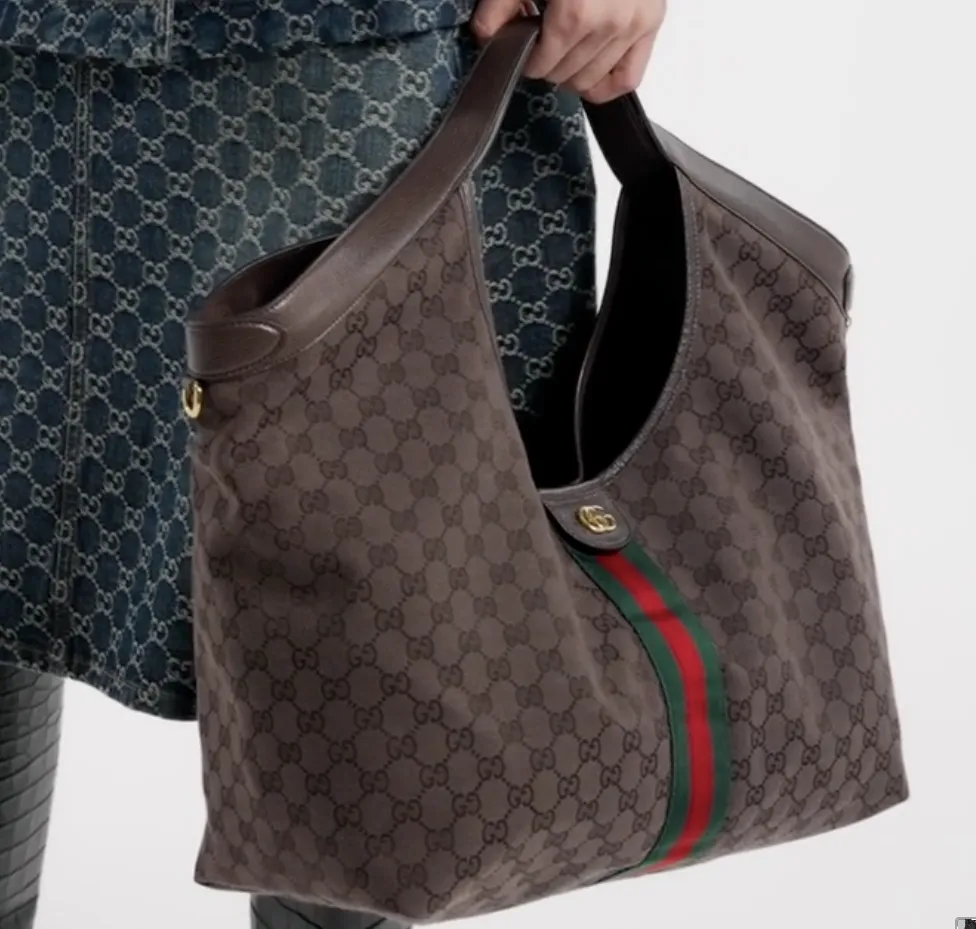
Many iconic styles use GG Supreme canvas, the coated cotton printed with the double interlocking monogram — one of the most heavily copied materials Gucci makes. On an authentic piece, the print is sharp and well-defined, never blurry or washed out, with a consistent beige-ebony tone across the whole surface. If the pattern looks muddy, with bleeding edges or colours that shift, take it as a warning sign. On canvas styles, also check the leather trim — handles, flap, base — which should have a rich, even colour, not a dull, dried-out brown.
The logo, the GG monogram, and other details
The two G’s in the monogram face each other as mirror images. The letters should be perfectly aligned, symmetrical and level, with no dots or marks separating them. One classic tell: if one of the G’s looks more like the number “6”, with the end curling in too tightly, you’re almost certainly looking at a copy.
Wherever the monogram meets a seam, a zip, or a corner, an authentic bag matches the pattern with obsessive care — counterfeit factories, trying to save on canvas, often cut corners and let the print misalign. The lettering in the word GUCCI is also precise and consistent; letters that are too wide, slanted, or uneven are a red flag.
Stitching, finishing, and hardware
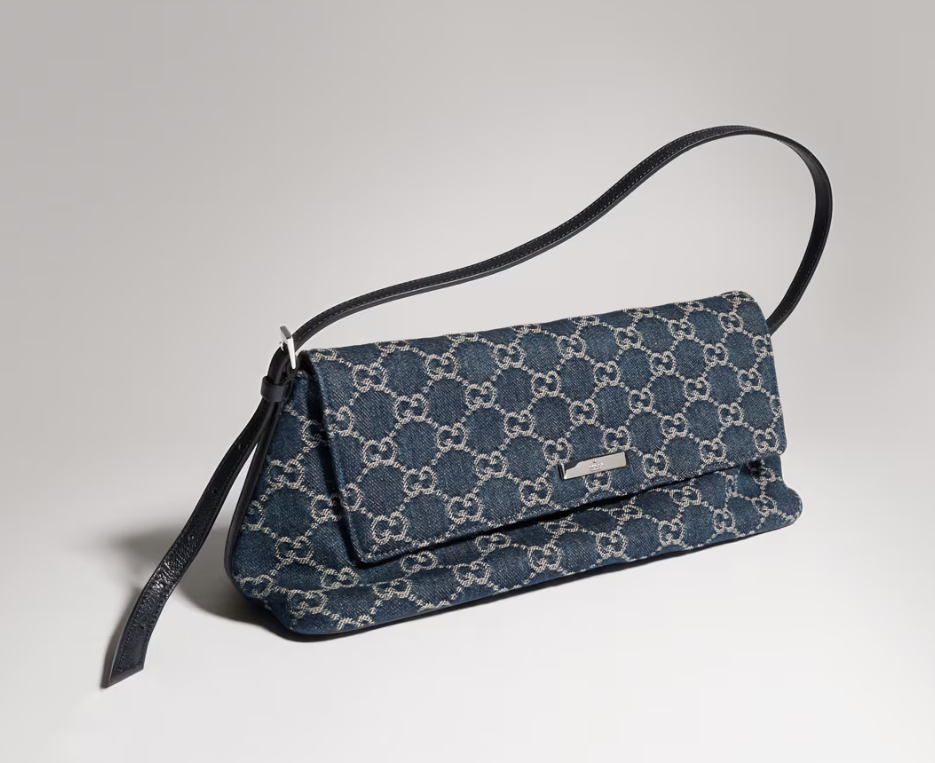
Stitching on a Gucci bag is tight, even, and straight, with no loose threads, visible knots, or skipped stitches. Golden rule: the thread matches the leather it finishes in colour, never lighter or darker. Crooked stitching, uneven spacing, or a mismatched thread colour are among the most reliable signs of a fake.
Hardware — buckles, clasps, zippers, studs, the famous horsebit — should feel heavy and solid in your hand, with an even finish and no bubbling or flaking. Engravings such as “GUCCI” on metal parts are clean and sharply defined. Quality zippers (often stamped, for example Lampo or YKK on older pieces) glide smoothly with no catching. Lightweight metal, chipped plating, or a zip that snags all point to poor construction.
Serial code, heat stamp, QR code, and the “Controllato” card
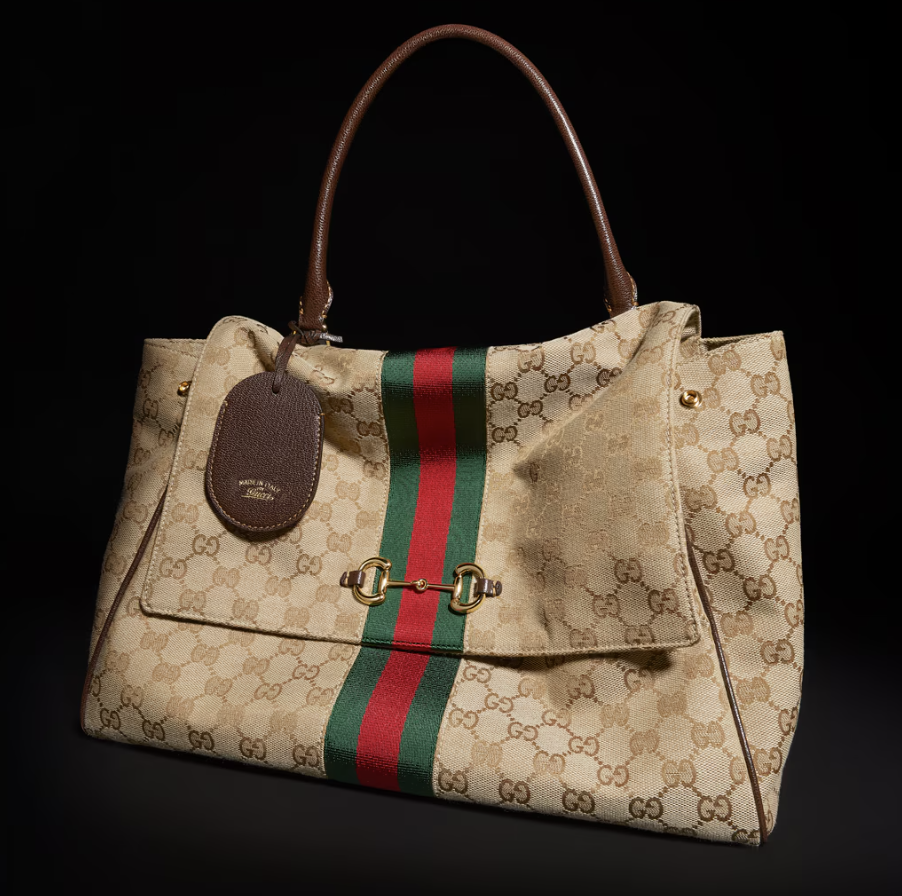
Inside the bag — usually in a pocket or along an interior seam — you’ll find a heat-stamped leather tab. On the front, typically three lines: the trademark symbol, the word GUCCI in capitals, and made in Italy in lowercase. The text is stamped, centred, and well-proportioned; extra lines or smudged lettering are suspicious.
On the back of the tab is the serial code. On anything made after 1990, it’s numeric only (typically 10 to 13 digits), always on two lines — the model reference on top, the article number below. It should contain numbers only, no letters, and be heat-stamped into the leather, not printed on the surface. On genuine pieces, the digits tend to be thin and not perfectly lined up; on fakes they’re often stamped too deep, too thick, or too heavily.
Newer styles may include a QR code next to the serial tag, or a built-in NFC chip, both linked to Gucci’s official authentication system. They’re a useful extra check, but should be read alongside everything else, never on their own.
A word on the card myth: the grey or white card printed with Controllato (“Inspected”) is only a quality-control slip, not a certificate of authenticity. Almost every counterfeit includes a copy of it too. Never treat the card alone as proof of anything.
Price, and where to buy the real thing
Price is a clue, not proof — but a deal that looks too good is almost always hiding something. As a rough guide for 2026, a GG Marmont starts at around €2,100–2,300, an Ophidia around €1,290, and a Dionysus from €3,300 upward (prices vary by model, size, material, and region). A “new” Gucci bag offered for a few hundred euros outside official channels is almost certainly not genuine.
To buy with peace of mind, stick to the right channels:
- Gucci boutiques and the official site, gucci.com: guaranteed authenticity, with a receipt and after-sales service.
- Authorized multi-brand retailers and department stores: always confirm the store is an official partner.
- Authenticated resale platforms (for example Vestiaire Collective, Rebag, The RealReal): every piece is checked by an authentication team before it ships. Read the policy carefully and keep your receipt.
Avoid unmoderated marketplaces with anonymous sellers, social media shops, and “parallel” channels — that’s where counterfeits concentrate. And if you have a real doubt about a piece you already own, the simplest move is still to bring it into a Gucci boutique or use a professional authentication service.
A transparency note: this guide is for information and buyer-protection purposes. We don’t promote or link to counterfeit products, and we don’t provide instructions for reproducing them.
More from Purse & Co
If you’re building out your knowledge of authentication basics, we’ve also covered how to spot a fake Louis Vuitton bag, how to spot a fake Chanel bag, and how to spot a fake Prada bag.
FAQ
Does the “Controllato” card prove a Gucci bag is authentic?
No. It’s only a quality-control slip, not a certificate of authenticity. Almost every counterfeit includes a copy of it, so it should never be treated as the only evidence — what matters is the combination of details: leather, stitching, serial code, and hardware.
Where is the serial code on a Gucci bag?
On the back of a heat-stamped leather tab inside the bag, often in a pocket or along an interior seam. On anything made after 1990 it’s numbers only, arranged on two lines, and it should be heat-stamped and clearly legible — never printed on the surface.
Is the serial code alone enough to confirm a bag is genuine?
No. Counterfeiters copy serial numbers too. The code is one piece of the puzzle, not the whole picture — always cross-check it against the leather, monogram, stitching, hardware, and any QR code or chip. If you’re still unsure, take it to a Gucci boutique.
How can you tell a fake Gucci bag from the GG monogram?
On an authentic bag, the two G’s are crisp, symmetrical, and aligned, with the pattern matching up neatly at seams and corners. If one G looks like a “6”, if the print is blurry, or if the pattern doesn’t line up at the edges, it’s very likely a copy.
Does a low price always mean a bag is fake?
Not always, but it’s a strong warning sign. Outside official channels, a “new” Gucci bag for a few hundred euros is almost certainly not authentic. For secondhand pieces, stick to platforms that authenticate items before they’re sold.
Disclosure: this article may contain affiliate links. If you buy through these links, Purse & Co may earn a small commission, at no extra cost to you.