
If you are petite, dressing well comes down to one decision repeated in different ways: keep the vertical line of the body unbroken. In practice that means a high waist, one color family from shoulder to hem, shoes that continue the leg instead of cutting it, and bags scaled to your frame. No heels required, and no new wardrobe either — a handful of choices, made consistently, does more than any single garment. Here is what actually works, point by point.
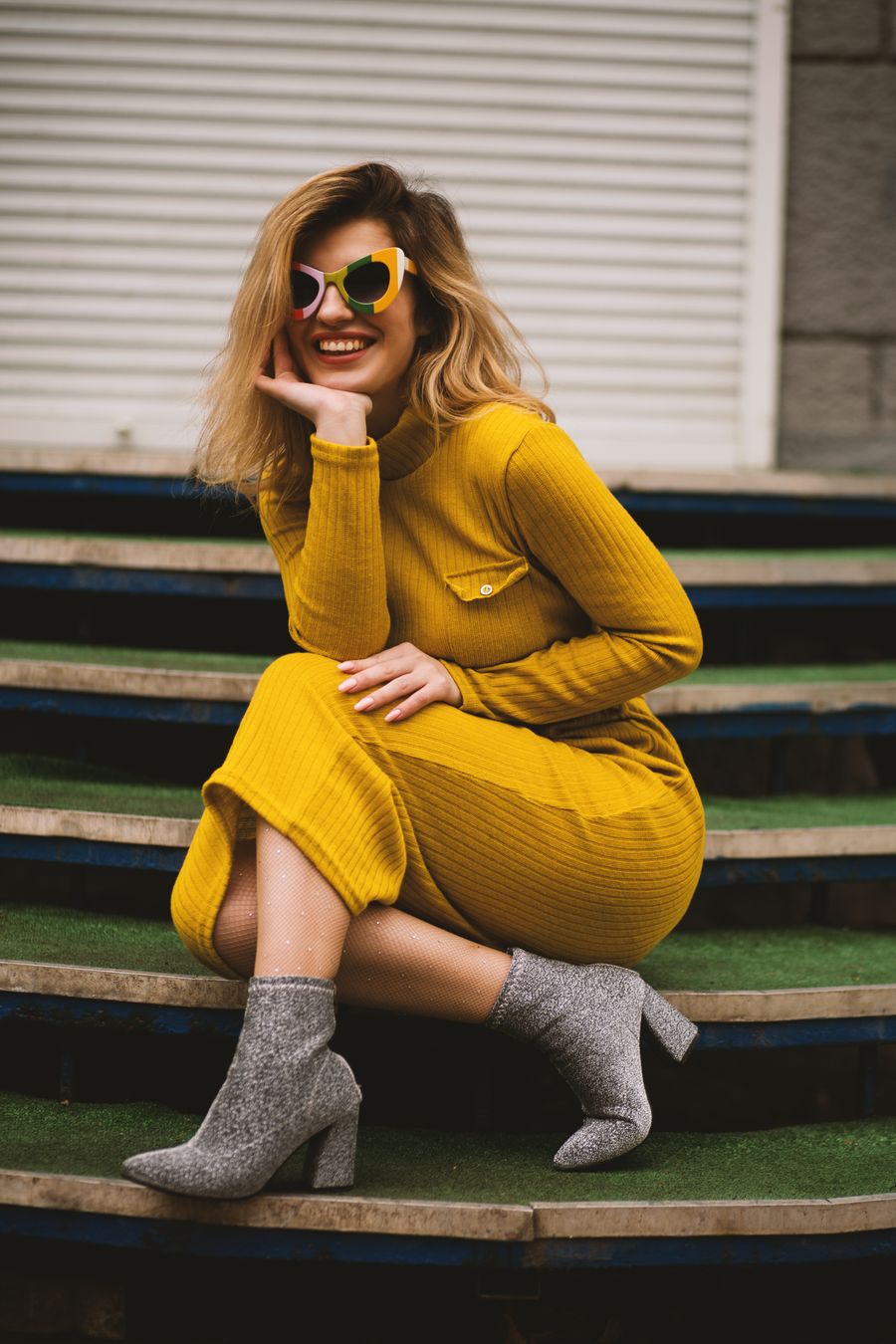
What “petite” really means
Petite is a fit standard, not a small size. It describes how a garment is cut — shorter sleeves and inseams, a waist seam set higher, narrower shoulders, a shorter distance from shoulder to bust — for a body that is shorter overall. It says nothing about how slim you are: petite ranges run across the same size spread as regular ones.
Where brands draw the line varies a little. Talbots states its petite range is proportioned for women 4’11″ to 5’4″, and 5’4″ (163 cm) is the usual cut-off across US labels; several UK retailers set it lower, at 5’3″. Worth knowing, because measured national health data (the US NHANES survey) puts the average adult American woman just under that line, at 161.8 cm. Petite is not a niche — it is roughly half the room. If a regular-cut jacket keeps hitting you at the wrong point on the hip, that is the pattern, not you.
Move the waist up: the change with the most leverage
The waistline is the single strongest lever you have, because it decides where the eye splits the body into two parts. Raise that split and the legs read longer, flat shoes and all. High-waisted jeans, trousers and skirts do it; so does tucking a top in, even loosely at the front only. A thin belt in the same tone as the trousers holds the line without adding a horizontal band of contrast.
The same logic explains why cropped jackets and blazers that nip in at the waist tend to work better than long, boxy ones, and why a long coat is best left open: two vertical panels running down the body rather than one wide block. One centimeter of definition at the waist is worth more than five of heel.
The column of color
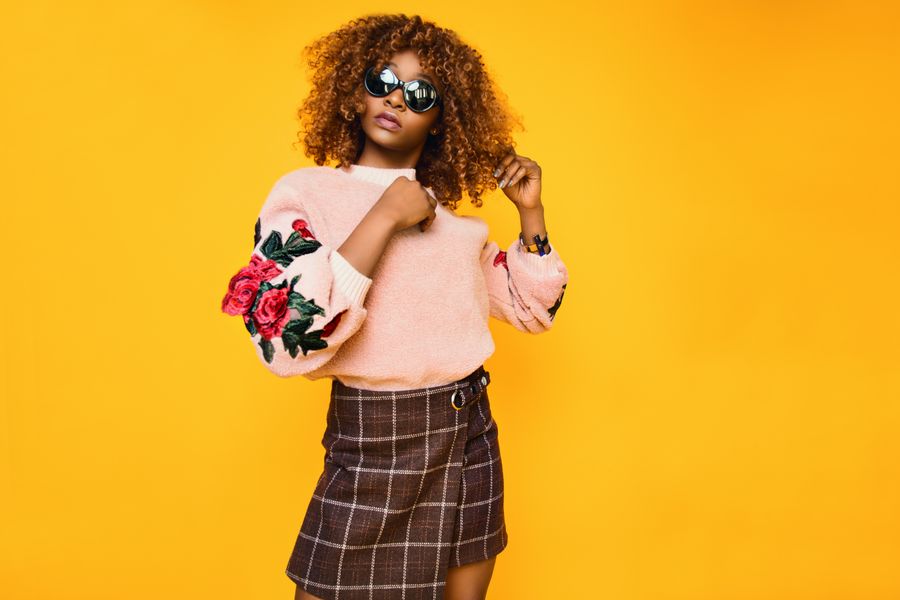
Dressing tonally — one color family from top to shoe — is the trick stylists reach for first with small frames, and the reason is mechanical: without a hard break of contrast, there is nothing to stop the eye halfway down. You do not have to wear black. Shades of the same family work just as well: cream, sand and camel; or denim, navy and ink. A solid midi dress with a boot in a close tone is about as efficient as this gets.
Contrast is not banned, it just needs placing. Put it above the collarbone or in an accessory — a scarf, earrings, the bag — rather than as a wide band across the hips.
Shoes that don’t cut the leg
Heels help, but they are not the point. What lengthens a leg is a shoe that does not interrupt it:
- Tone matched to the leg — a shoe close to your skin tone, your hosiery or your trousers extends the line; a dark shoe under a bare leg stops it dead.
- A slightly tapered toe on flats, loafers and pumps adds visual length without a millimeter of heel.
- Ankle boots that end below the ankle bone, not above it.
- Skip the ankle strap and the mid-calf boot: both draw a hard horizontal line at the worst possible point.
Sneakers are fine, provided they are low-profile and reasonably clean in shape. Chunky soles are not automatically out — they add height — but a bulky sneaker under a cropped trouser produces exactly the break you spent the rest of the outfit avoiding.
Bags in scale, and how you carry them
Same principle as the clothes: the bag should be in proportion to the body. An oversized tote on a small frame looks larger still and swallows the silhouette; a medium or small bag reads correctly. Compact top handles, mini bags and crossbodies all work — and with a crossbody, shortening the strap so the bag sits at the waist rather than low on the hip keeps the line high, which is the same waist trick applied to an accessory.
One warning if you shop the small designer classics second hand: mini bags are among the most heavily copied items on the resale market, precisely because they are the entry point to a house. Before you pay, run the piece through the checks in our guides on how to spot a fake Chanel bag, how to spot a fake Fendi bag and how to spot a fake Celine bag.
Three rules you can throw away
“Vertical stripes slim you, horizontal stripes widen you.” This one has been tested and it does not hold. Peter Thompson and Kyriaki Mikellidou at the University of York ran four experiments on the Helmholtz illusion and published them in i-Perception in 2011: a horizontally striped rectangle had to be made about 4.5% wider to look as wide as a vertically striped square, a drawn figure in horizontal stripes needed 5.8% more width at the hips, and a 3D mannequin needed 10.7%. Horizontal, in other words, was the slimming direction every time. Note what the research does and does not say: it is about apparent width, not height. For height, what matters is where the outfit breaks the body, not which way the stripes run.
“Petite frames can’t wear long.” Wide-leg trousers, maxi dresses and long coats are all wearable. The conditions are specific: high waist, fluid fabric rather than stiff, hems that either graze the floor or land cleanly at mid-shin, and coats worn open. What genuinely does not work is the undecided length that stops at the widest part of the calf.
“You need heels.” No. Heels add centimeters; tone, waist placement and hem length change how the whole figure reads, which is a bigger effect for less pain.
A six-piece core, and what to skip
Reduced to a shopping list, this is what earns its place:
- High-waisted jeans, straight or slightly flared, long enough to graze the shoe.
- A cropped or waist-defined blazer — the one jacket that never cuts you in the wrong place.
- A solid-color midi dress, the fastest column of color in the wardrobe.
- Pumps or flats in a tone close to your skin, with a slightly tapered toe.
- Ankle boots that finish below the ankle bone, ideally in the tone of your usual trousers.
- A medium crossbody with an adjustable strap, so you can carry it short.
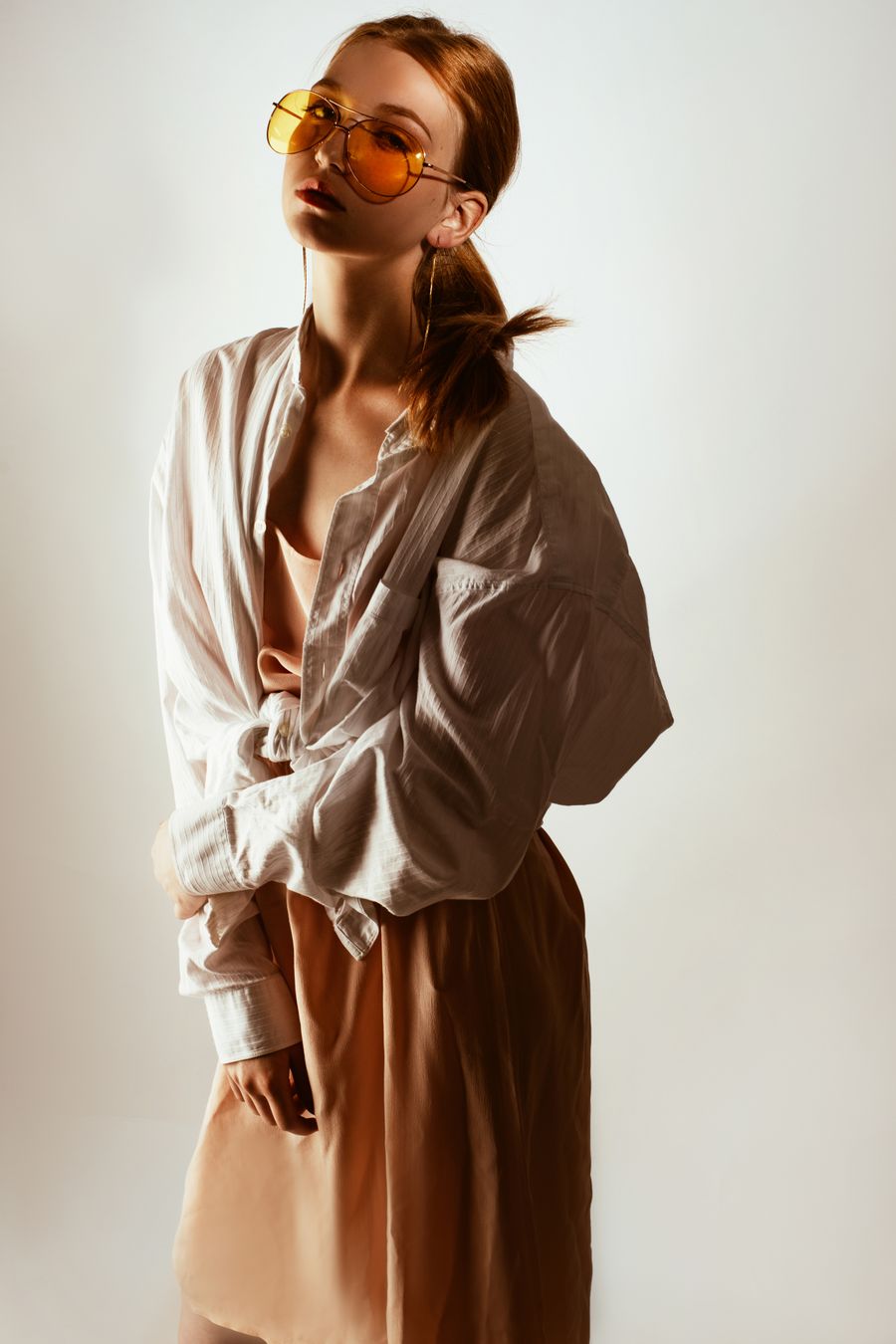
What to skip: doubling volume top and bottom (balance one against the other, as in the shirt-and-slip-skirt combination above), hems that land at the widest point of the calf, and prints large enough to occupy the whole torso. Everything else — color, small prints, jewelry — is personality, and personality has no height.
Frequently Asked Questions
What trousers are most flattering if you are petite?
High-waisted jeans or trousers with a straight or slightly flared leg, hemmed long enough to graze the shoe. The high waist raises the point where the eye divides the body, so the leg reads longer even in flat shoes.
Can petite women wear maxi dresses?
Yes, as long as the dress is fluid rather than stiff, in a solid color or a small print, and cut to a decisive length: either a clean midi or long enough to reach the ankle. The length to avoid is the one that stops at the widest part of the calf.
What size bag should I choose if I am petite?
Medium or small, in proportion to your frame: compact top handles, mini bags, or a crossbody worn with the strap shortened so the bag sits at the waist. Oversized totes tend to overwhelm a small silhouette.
Does dressing in one color really work?
Yes. A single color family from top to shoe removes the horizontal breaks that stop the eye halfway down, so the figure reads as one continuous line. It works with different shades of the same family, not only with all black.
Do I have to wear heels?
No. Shoes that do not interrupt the leg matter more than heel height: a tone close to your skin or your trousers, a slightly tapered toe, and ankle boots that end below the ankle bone. Heels are an addition, not a requirement.
Article by the Purse & Co Editorial Team.
Disclosure: this article may contain affiliate links. If you buy through these links, Purse & Co may earn a small commission, at no extra cost to you.